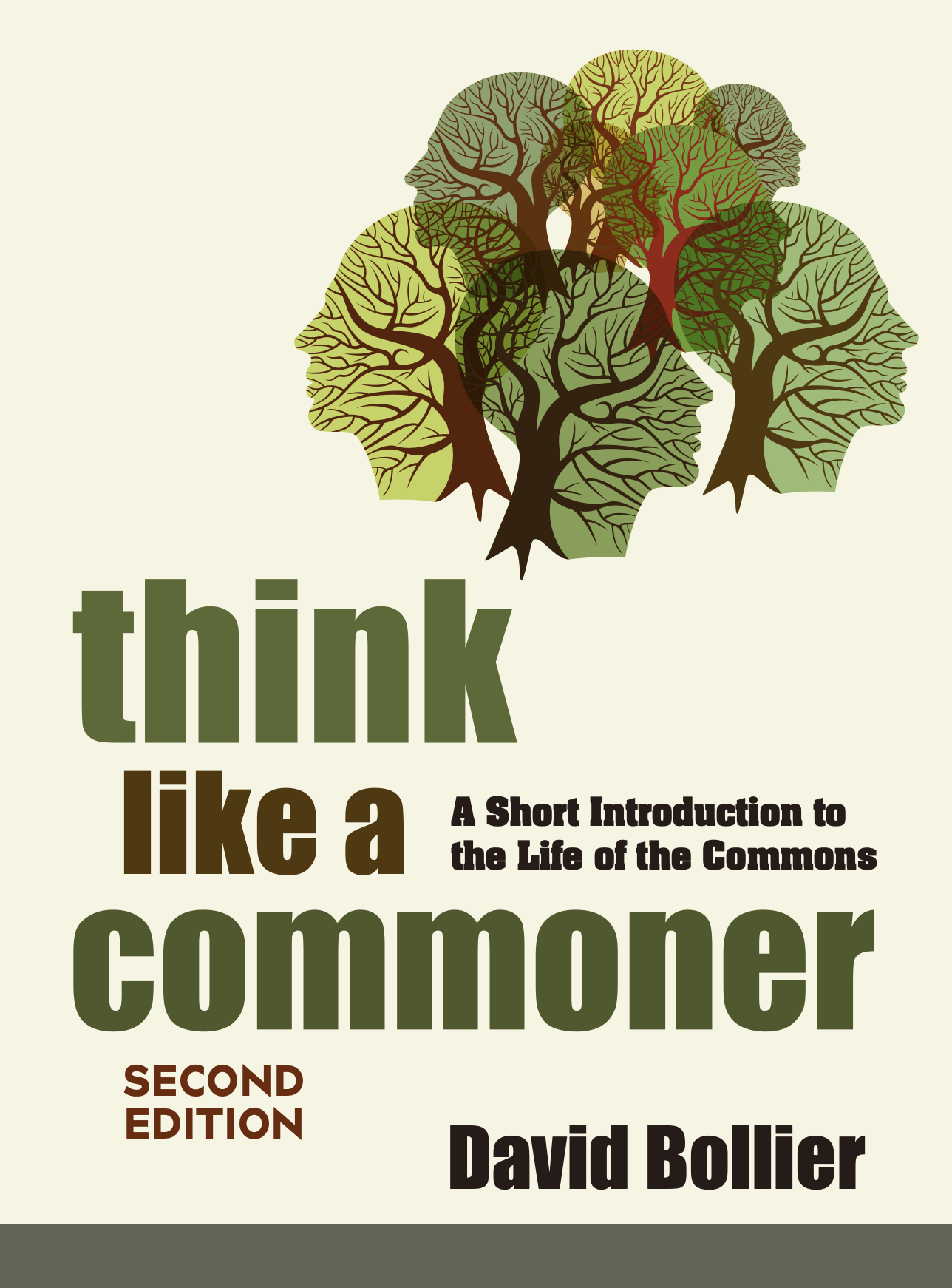
One point of using a Creative Commons license is to make a book (and other creative works) as widely available as possible. To that end, I’m thrilled to announce a new stage in the life of Think Like a Commoner, Second Edition, published last year by New Society Publishers.
The license essentially means that the work can be copied and shared so long as credit is given to me as the author (BY). Noncommercial uses are allowed without permission, but any commercial reuses require my permission (NC). Any derivative uses of this book, including translations, new printings, and excerpts, are permissible so long as they also use the same license requiring sharing (SA).
Understanding how online communities function is a particularly vexing challenge. For example, is a wiki best understood as a volunteer club and nonprofit organization? Or does it more closely resemble a business that organizes the wisdom of crowd -- or tames the unruliness of a mob? It becomes even more complicated when you consider that wikis have porous boundaries, enabling people to become either formal members or casual lurkers.
People trying to grasp how collaborative spaces work often turn to the literature of the commons. It has a lot to say about the dynamics of collective action and sharing wealth, after all. But does the stewardship of land or water really resemble the stewardship of online information by quasi-strangers scattered around the world?
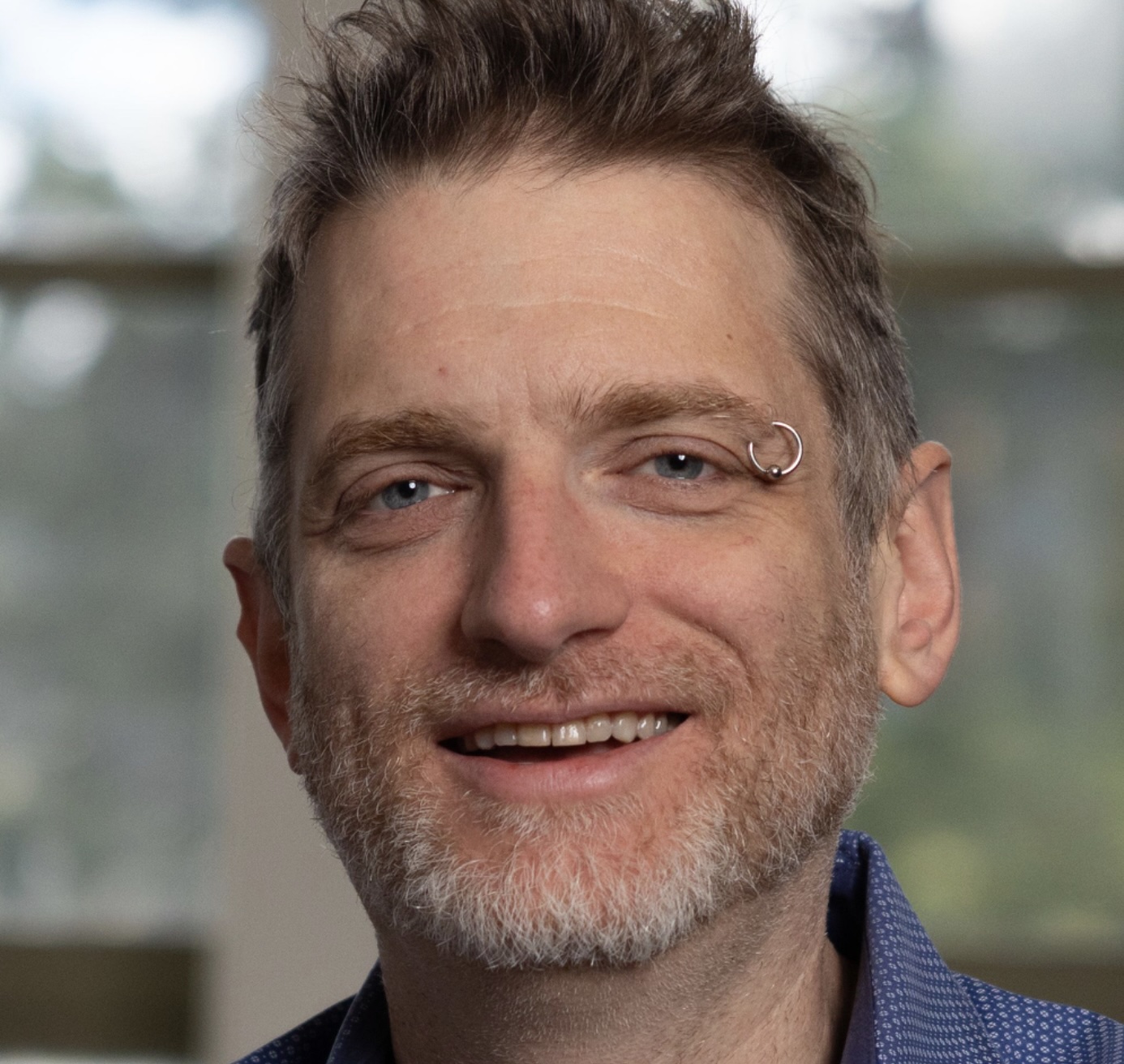
Professor Benjamin Mako Hill
These are the sorts of conceptual challenges that tug at Benjamin Mako Hill, a computer science professor at the University of Washington and scholar of digital collaboration. Mako, as he’s usually called, brings special talents to this inquiry. He’s not just a scientist and scholar, but a committed free software activist and hacker who has made significant contributors to the Debian and Ubuntu projects, two versions of the GNU/Linux computer operating system. He advises the Wikipedia project and has received a prestigious US National Science Foundation grant to study the governance and lifecycles of knowledge commons.
I was curious to learn more about the social life and governance of digital commons, so I invited Hill to join me on my podcast Frontiers of Commoning (Episode #73). Mako told me how digital communities go through different developmental stages, which affects their strategic choices as commoners. He also described how fledgling commons must often struggle to gain public credibility and new contributors – but later, they must develop ways to protect against hostile forces seeking to monetize or control their collective wealth (code, curated information, webs of relationships).
When he first began to study digital commons, Hill wondered why some of them become really big and successful, such as Wikipedia, while the vast majority of them don’t. He soon realized that most collaborative websites start out with a very basic challenge, How do we attract people?
Humanity cannot continue to expand production and consumption exponentially on a finite planet. It’s biophysically impossible. The carbon emissions are already producing more volatile weather patterns, more frequent floods, droughts, and wildfires, and disruptions of agriculture, commerce and global supply chains.
And yet the US Government and respectable opinion remain in zones of denial or deflection. The Trump administration is savaging climate science, environmental regulation, and international treaties, while saner responsible adults are at least focused on energy efficiency and renewables. But few people dare to name, let alone tackle, the real driver of climate collapse – the capitalist economy’s demand for relentless economic growth.
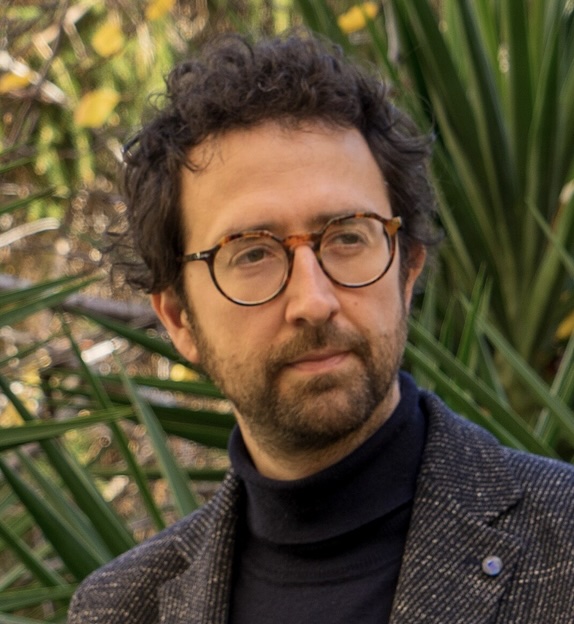
Professor Federico Savini, University of Amsterdam
To take stock of this quandary, I decided to have a long talk with a leading degrowth scholar and activist, Federico Savini. An associate professor in environmental planning at the University of Amsterdam, Savini has spent a lot of time thinking about how to bring market activity into ecologically sustainable limits, an agenda often known as degrowth. As a co-editor of the book Post-Growth Planning: Cities Beyond the Market Economy, Savini has suggested how cities, agriculture, energy, and transit need to change, and how affordable housing, better land stewardship, and infrastructures for social care and eco-resilience could help reduce climate impacts.
I recently interviewed Savini for my podcast Frontiers of Commoning (Episode #72) to get a keener sense of the state of the degrowth movement today. What are the strategies it’s calling for, the hotspots of degrowth advocacy, and the challenges the movement is facing?
In the US, of course, degrowth is a rarely heard term. In hyper-individualist, consumerist American culture – the world citadel of modern capitalism – few people want to hear brutally honest accounts of what needs to be done. Curb the drivers of growth? Respect ecological limits at the expense of profits? Foster social equality by curbing the power of oligarchs and corporations? Change who makes key investment decisions? In most cases, the answer is no.
The western world has long promoted “development” as a high-minded mission to bring capitalist markets and growth to impoverished areas of the world. But what if development were seen not just as a matter of creating markets, but of strengthening social collaboration and sharing in meeting needs? In short, what if development agencies were to support commoning?
One major national development agency – the French Development Agency, or AFD – is actively experimenting with this very challenge. For the past five years, Stéphanie Leyronas, an AFD research fellow specializing in the commons, has been working with an internal expert network at the agency to investigate how it might support commoners in the Global South. The goal is to improve commons-based stewardship of land, access to water and energy, urban spaces, digital platforms, and the so-called collaborative economy.
Stéphanie Leyronas of Agence Française de Developpement (AFD)
It was refreshing to hear how AFD has been attempting to create a modest “laboratory of the commons.” In the process, the small AFD team has come to understand that the commons requires a shift of mindset and development strategies.
As Leyronas put it in our interview, “Donor action is really guided by project logic. Goals are predefined and indicators [of success] are fixed. We usually have evaluations in advance or at the end. But commons evolve very differently. They follow long-term, open-ended processes with deliberation and adaptation.”
In a recent talk to the UN Food and Agriculture Organization (FAO), Leyronas explained how supporting the commons requires that development programs engage with the “relational logics” of a community. It has to focus on how people relate to each other, learn to cooperate, and care for natural systems. There must be time and space for commoners to experiment, to develop a collective solidarity and stewardship of shared wealth; to collectively learn; and to integrate practice & reflection, even at small scales.
In the late 1970s, well before I became interested in the commons, one of the most formative books that I encountered, at age 23, was Lewis Hyde’s The Gift: Imagination and the Erotic Life of Property. I first read an excerpt in the Whole Earth Review – the countercultural quarterly edited by Stewart Brand – and shortly thereafter the book. I was thunderstruck by the invisible social relationships wrought by gifts and their karmic ramifications, all of which Hyde brought vividly into view.
Drawing on anthropologist Marcel Mauss’ famous 1923 book on gift-exchange, Hyde took the idea much further, showing how gift exchange is a ubiquitous social phenomenon for forging and maintaining reciprocal relationships. As Hyde shows, gift economies of reciprocity are particularly important to artists and creative communities in their functioning as commons. In their artistry, musicians and performers must learn to see their creative talents as gifts, something they must share without expectation or guarantee of return, but invariably important benefits materialize – inspiration, creative mastery, a sense of belonging – that manifests as if by grace.
Lewis Hyde. Photo credit: Anna Schuleit Haber
These ideas had obvious value when I began exploring the commons in the late 1990s. Hyde cites many examples in all sorts of unexpected realms of how gift exchange animates a gentle reciprocity and mutual benefits – blood banks and organ donation systems, Indigenous culture and countless artistic contexts. The generativity of gift-exchange has an almost mysterious aura and spiritual dimensions, as ratified numerous fairy tales affirm.
After being so influenced by The Gift in my younger day, I recently asked Hyde to join me for a conversation on my podcast, Frontiers of Commoning (Episode #70). I wanted to see how his and my perspectives of gift economies and commons may have evolved over the years, and what topics may be in his field of vision today. (One is AI.)
We also spoke about his classic 2010 book, Common as Air: Revolution, Art and Ownership, which explores how creativity and culture have always functioned as commons. The US Founding Fathers recognized the importance of freely available knowledge and creative works in the late 1700s, for example. Hyde spent an entire chapter in the book describing how Benjamin Franklin – otherwise celebrated as a commercially minded individualist and entrepreneur -- is more accurately called a “founding pirate” for insisting that the free flow of ideas and inventions should override expansive patents and copyrights.
As should be clear by now, the core puzzle that relationalized finance seeks to mitigate or resolve is actually an ontological and cosmological clash that takes place in everyday circumstances. It’s a struggle between different notions of value and meaning. It’s the glimmer of a worldview that steps away from many premises of liberal-capitalist-modernity. Does humanity consist chiefly of rational, self-interested individuals seeking material gain through market exchange, and exploiting nature as a (dwindling) resource that stands separate and apart from humans? This is the cosmology of contemporary finance.
Or does humanity consist of interdependent, cooperative individuals nested within collectives, which themselves are nested in complicated ways within an animate Earth of countless living beings engaged in a symbiotic, evolutionary dance? We need a finance in sync with this world.
Without some adaptation of conventional finance and its implicit cosmology, capitalist finance will continue to inflict harm on nature and communities. It will continue to financialize life-systems as assets, and in so doing, superimpose an alien matrix of value and extractive production on them. So a key goal here is to help commoners secure much greater equity and control over their shared wealth, and to help them avoid becoming beholden to distant investors, lenders, and state authorities with their own empire-building priorities.
If bioregions are going to become more economically self-reliant and culturally self-directed, they must be able to insulate themselves from the neocolonial workings of global finance and markets. This means that bioregions must be able to assert their own investment priorities and become more self-reliant by intensifying their intra-regional commerce. Their basic challenge is to fend off outside commercial control and extraction (while obviously continuing many commercial dealings) so that the regional economy can benefit from the “multiplier effect” of locally circulated money while ensuring strong ecological stewardship and regional identity and culture.
Without some deliberate strategies for consolidating market activity within bioregions – making enterprises more interdependent and regionally focused – the priorities of capitalist businesses and global capital will override regional eco-stewardship and self-determination. Attempts to build a coherent regional economy and identity will be subordinated to “free market” imperatives and everything they privilege
It is impossible to prescribe a single strategic template for addressing these issues, however. An agenda this broad, ambitious, and long-term will necessarily vary from one bioregion to another. That said, in conjunction with commons, bioregional market structures and strategies could prod commerce to become more place-committed and socially embedded. These bioregional strategies include:
A. Community-designed infrastructures for bioregional production. Community participation in creating and managing small, shared infrastructures can be catalytic for the bioregional economy in general (commercial, commons-based, social, ecological). Shared bioregional infrastructures can reduce overhead, transport, and retail costs. It can make essential services like WiFi access, solar energy, water systems, grain milling, information-sharing, and databases -- more accessible and shareable, all while strengthening social cohesion and bioregional identity.
B. Inalienable shared assets. Assuring that major bioregional assets like arable land, groundwater, housing, forests, and other “natural assets” remain inalienable – off-limits in perpetuity to private purchase – makes a bioregion more stable and secure. It prevents companies and private equity funds from acquiring essential infrastructure through which they would extract exorbitant rents, siphoning money away from the bioregion. Keeping shared assets inalienable also addresses social inequity by making essential equity assets free or lower-cost, and available in perpetuity. For example, groups like Agrarian Trust (US) and Terre de Liens (France) rely on community land trusts to make land inalienable and stewarded as commons, which has all sorts of salutary effects: farmland for a younger generation of farmers, reduced equity costs that enable organic, local agriculture, and meaningful long-term employment for local residents.
This is the third section of an essay, "Relationalized Finance for Generative Living Systems and Bioregions," by David Bollier and Natasha Hulst. The remaining two sections will be published tomorrow and Saturday. The full essay can be downloaded as a PDF here.
3. Toward a New Theory of Value (and Meaning)
In rethinking how “nature finance” should be structured, the distinctive modes of value-creation in commons and bounded markets are often misunderstood. Standard economics sees market exchange, money and growth as the only significant engines of wealth-creation, a process that finance purports to facilitate. It is therefore difficult for conventional finance to understand that there are many other distinctive species of “value” that ecosystems and organized commoning generate.
The word “value” brings to mind money and markets, but the value generated by nature is quite different in an ontological sense. The bounty brought by rainfall, fertile soil, and biodiversity cannot truly be expressed through quantitative proxies, prices, algorithms, or markets because this “wealth” doesn’t exist in static, objectified forms or essentialist identities. Humans may equate fish with food and trees with lumber, but of course fish and trees play many other ecological roles in sustaining life.[12] The value of living entities subsists within their symbiotic relations – the dense web of interdependencies that generates abundance in a robust, self-sustaining system. This matrix is far more complicated than standard economics or markets can begin to represent.
While it’s possible to see abundance in objectified units (a bushel of apples, a hectare of land), the reality is that this value arises only as part of dynamic, evolving living systems whose actual value eludes quantification and monetization.[13]It may take “thirty leaves to make the apple,” as Thich Nhat Hanh wrote, but businesses, fixated on the marketable fruit, have only a narrow, economic self-interest in the leaves, roots, tree trunk, orchard, ecosystem, and weather.
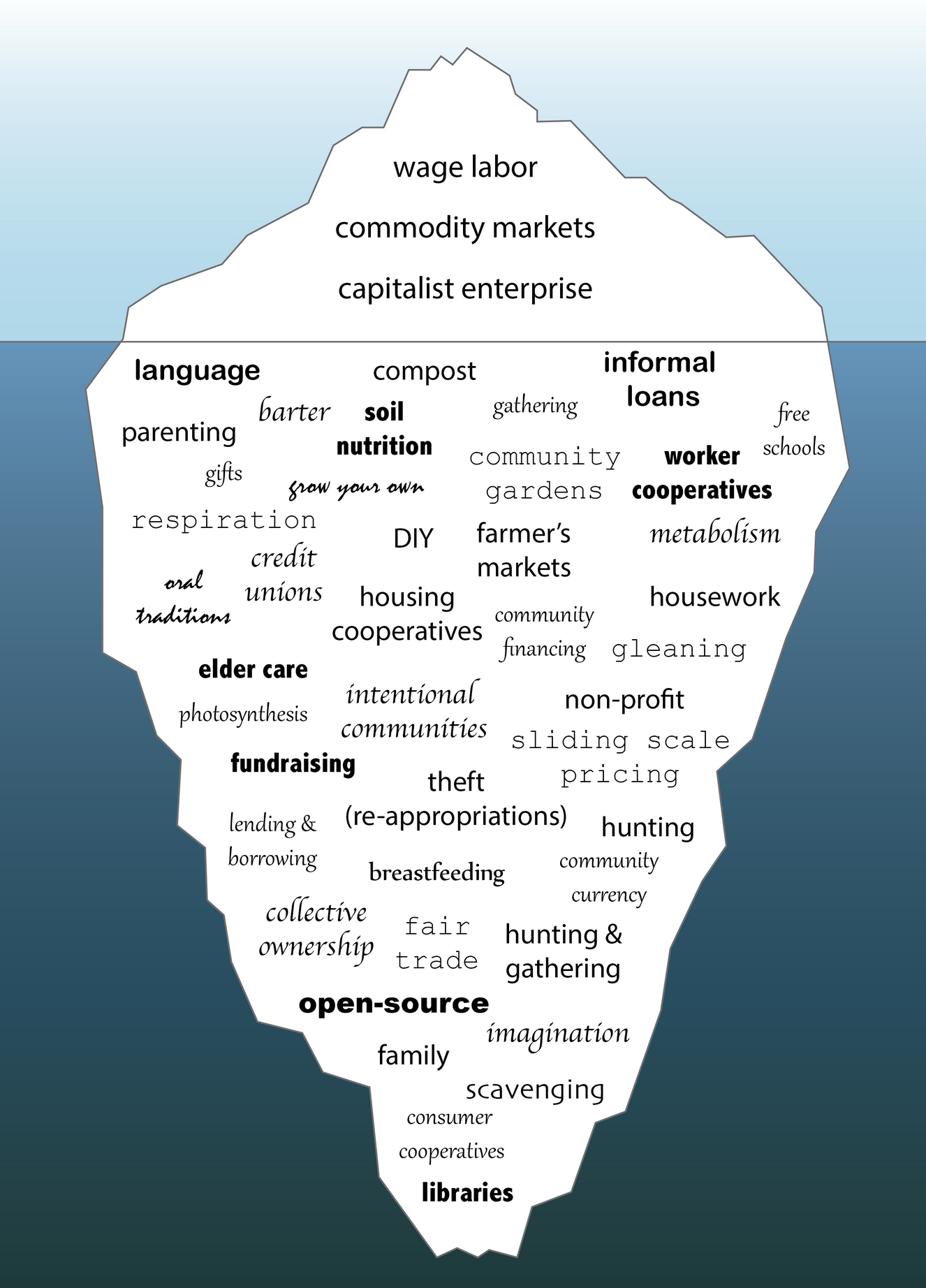
Community Economics Research Network, licensed under CC BY-SA 4.0 International License
Inspired by feminist economic theory, J.K. Gibson-Graham proposed an iceberg image to suggest how much of “the economy” actually subsists outside of formal markets, remaining largely invisible and treated as inconsequential. The behaviors enumerated by the illustration below suggest how much economic work takes place in non-monetized forms, outside of wage labor and production for capitalist markets. These robust circuits of value-creation, often marginalized by standard economics and finance, can be seen in the generativity of living systems with sufficient organization: ecosystems of diverse organisms, agroecological farming, permaculture practices, online communities of collaboration, mutual aid networks, gift economies such as blood banks, scholarly disciplines, and artistic circles, timebanking collectives, and so on. Their contribution to “the economy” is enormous, but it is typically understated or ignored.
This is the second section of an essay, "Relationalized Finance for Generative Living Systems and Bioregions," by David Bollier and Natasha Hulst. The remaining three sections of the essay will be published in the remaining days of this week. The full essay can be downloaded as a PDF here.
2. Commoning as Relational Provisioning and Governance
Commoning plays a crucial role in the implementation of bioregional action – and relationalized finance – because it is a proven set of social practices and organizational forms for bringing people together into shared purpose. At their core, commons are vehicles for collaboration and peer governance that are capable of limiting or neutralizing capitalist domination and control. As described in Bollier and Helfrich’s book Free, Fair and Alive, there are recurrent patterns of commoning by which commoners successfully shape the terms of their own governance, provisioning, and allocation of benefits.[6]
Commons are not a new phenomenon; they have been a consistent, productive presence throughout history. Indeed, an estimated two billion people worldwide, operating outside of the market system without private property rights or money, meet their needs through commoning, according to the International Association for the Study of the Commons. This activity can be seen in commons for stewarding land, coastal fisheries, community forests, farmland, water systems, and regional food webs.
Commoning also manifests in a growing international Commonsverse of projects in diverse modern contexts. Urban commoners use public spaces and buildings, mutual aid networks, alternative currencies, peer-savings clubs, timebanking, and urban agriculture to meet needs. Digital commoners have developed a vast oeuvre of shareable software code, network infrastructures and protocols, Fab Labs and hackerspaces, platform cooperatives, shareable content using Creative Commons licenses, open-access scholarly journals and websites, and open educational resources (curricula, syllabi, videos). The practices of commoning can also be seen in co-operatives, informal care commons, co-housing, and arts and culture collaboratives.[7]
Have you noticed how the term “bioregional” is becoming a new eco-buzzword and greenwashing term? At the same time, many ordinary people are genuinely excited about the idea of bioregionalism as a constructive way to focus activism and socioeconomic innovation. Bioregionalism offers a practical, politically accessible space for addressing climate change, social inequality, the eclipse of democracy, out-of-control oligarchs, and capitalist growth.
To try to make sense of the current state and future of bioregionalism, my Amsterdam colleague Natasha Hulst and I decided to pull our thoughts together in a just-completed essay, “Relationalized Finance for Generative Living Systems and Bioregions.”
Because the piece is more than 13,000 words, I've decided to serialize the essay here, with one new section added every day this week. I am also posting a downloadable PDF of the 27-page document here.Natasha posted the essay on her Substack page as well.
In our piece, we wanted to assess the transformational potential of bioregioning in both a macro-conceptual and applied way. How exactly should bioregional initiatives proceed, and with what theory of change? What role can commons play in actualizing a bioregional transition in the economy? How can the extractive, predatory aspects of capitalism be kept at bay and practices of commoning fortified? What are some of the notable bioregional activities already underway?
Besides exploring these questions, Natasha and I propose an alternative theory of value (to market price), and sketch out various strategies by which (noncapitalist) “socio-ecological markets” might arise and intensify intra-regional commerce.





Recent comments