Humanity cannot continue to expand production and consumption exponentially on a finite planet. It’s biophysically impossible. The carbon emissions are already producing more volatile weather patterns, more frequent floods, droughts, and wildfires, and disruptions of agriculture, commerce and global supply chains.
And yet the US Government and respectable opinion remain in zones of denial or deflection. The Trump administration is savaging climate science, environmental regulation, and international treaties, while saner responsible adults are at least focused on energy efficiency and renewables. But few people dare to name, let alone tackle, the real driver of climate collapse – the capitalist economy’s demand for relentless economic growth.
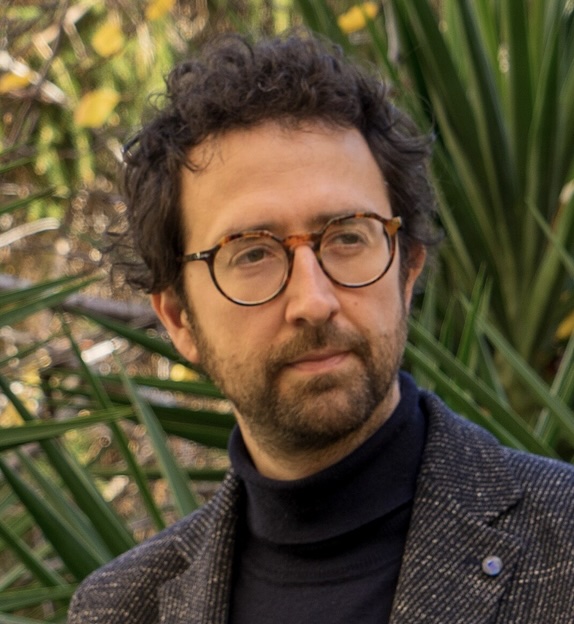
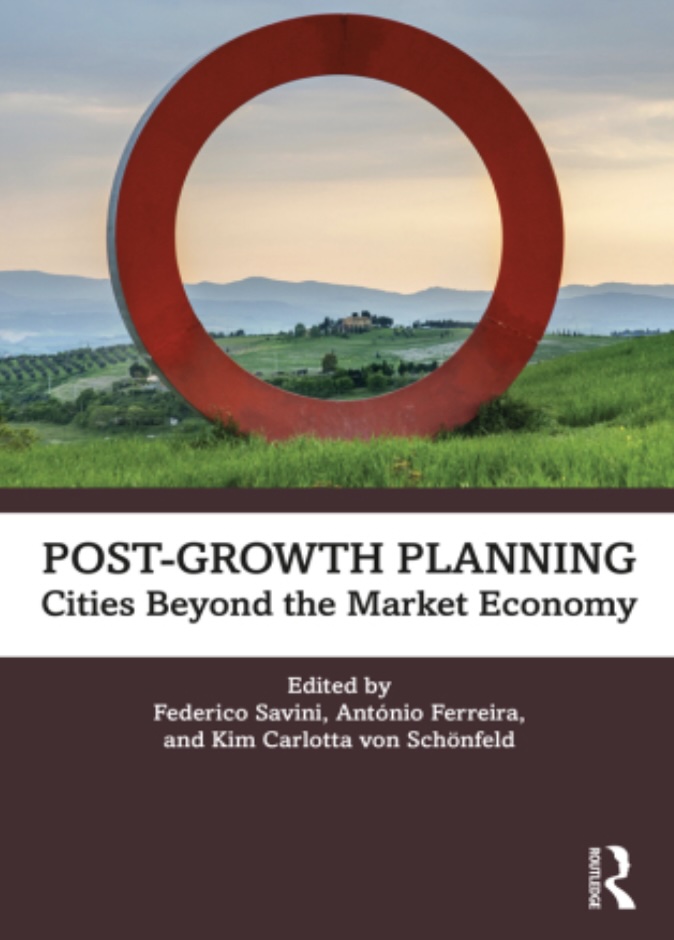
To take stock of this quandary, I decided to have a long talk with a leading degrowth scholar and activist, Federico Savini. An associate professor in environmental planning at the University of Amsterdam, Savini has spent a lot of time thinking about how to bring market activity into ecologically sustainable limits, an agenda often known as degrowth. As a co-editor of the book Post-Growth Planning: Cities Beyond the Market Economy, Savini has suggested how cities, agriculture, energy, and transit need to change, and how affordable housing, better land stewardship, and infrastructures for social care and eco-resilience could help reduce climate impacts.
I recently interviewed Savini for my podcast Frontiers of Commoning (Episode #72) to get a keener sense of the state of the degrowth movement today. What are the strategies it’s calling for, the hotspots of degrowth advocacy, and the challenges the movement is facing?
In the US, of course, degrowth is a rarely heard term. In hyper-individualist, consumerist American culture – the world citadel of modern capitalism – few people want to hear brutally honest accounts of what needs to be done. Curb the drivers of growth? Respect ecological limits at the expense of profits? Foster social equality by curbing the power of oligarchs and corporations? Change who makes key investment decisions? In most cases, the answer is no.
But to the extent that economic growth and carbon-fuel usage are tightly linked – and not capable of being “decoupled” – some degrowth agenda is ultimately inescapable. The only question may be whether it will arrive via catastrophe or choice.
Savini concedes, “The term degrowth is not a political winning narrative. This is quite clear. You don't get votes or move large masses of people with terms like ‘degrowth’ or ‘postgrowth.’” He explained that these terms “are often used by scholars to make an analysis of the socio-ecological consequences of capitalism,” but that crafting a mainstream political message “is not our job. We're not politicians.”
Having said that, Savini notes that degrowth is playing an important role in central and western European countries today. “Many cities are open to engaging with these new narratives of social transitions that have explicit social targets at their core,” he said.
Savini stresses that the social and ecological are “two sides of the same coin” in that both are connected to economic growth. Growth is often justified as the best way to create a surplus and tax revenues that can fund essential social services for everyone, but that very growth also expands carbon emissions and destroys ecosystems.
“The way to break this vicious circle,” Savini argues, “is to focus explicitly on building up the essential economies of care, housing, transport, health, education, creativity and art.” This can “reduce the need to push for economic growth." The challenge “is to break the link between the provision of essential services and the need to produce aggregate economic wealth.” And the only way to do that is to stop privatizing and commodifying all the social services that are needed.
Here is where a variety of social movements offer constructive options. Commons, cooperatives, the Solidarity Economy, cosmolocal production, peer production, community wealth-building, bioregional forms of relocalization -- they all are doing a fairly good job in trying to build a prefigurative social and economic order, at least in Europe, said Savini.
What’s not occurring, however, is a change of political attitudes that can win elections and change state policies. Citing the work of political scientist Erik Olin Wright, Savini believes that various system-change movements need to come together to work for a rupture in politics-as-usual, enough to create “a post-capitalist transition.”
This transition may be more imminent in regions of the world, especially the Global South, where climate-driven collapse is already occurring. In places experiencing severe drought and flooding, basic services essential for survival “cannot be provided at affordable and accessible costs," said Savini. In these areas, people are thinking about how to create or regenerate the economy in ways that can increase their security and autonomy.
Savini admits that the word “autonomy” is a loaded term that is usually seen in capitalist contexts. But for him, “It’s very simple: the socially just way to define autonomy is cooperation. If you are cooperating, you are autonomous subjects who need each other to support each other. This is the socially progressive view of autonomy. It's cooperation.”
You can listen to my full interview with Federico Savini here.




Comments
"crafting a mainstream political message is not our job."