The western world has long promoted “development” as a high-minded mission to bring capitalist markets and growth to impoverished areas of the world. But what if development were seen not just as a matter of creating markets, but of strengthening social collaboration and sharing in meeting needs? In short, what if development agencies were to support commoning?
One major national development agency – the French Development Agency, or AFD – is actively experimenting with this very challenge. For the past five years, Stéphanie Leyronas, an AFD research fellow specializing in the commons, has been working with an internal expert network at the agency to investigate how it might support commoners in the Global South. The goal is to improve commons-based stewardship of land, access to water and energy, urban spaces, digital platforms, and the so-called collaborative economy.
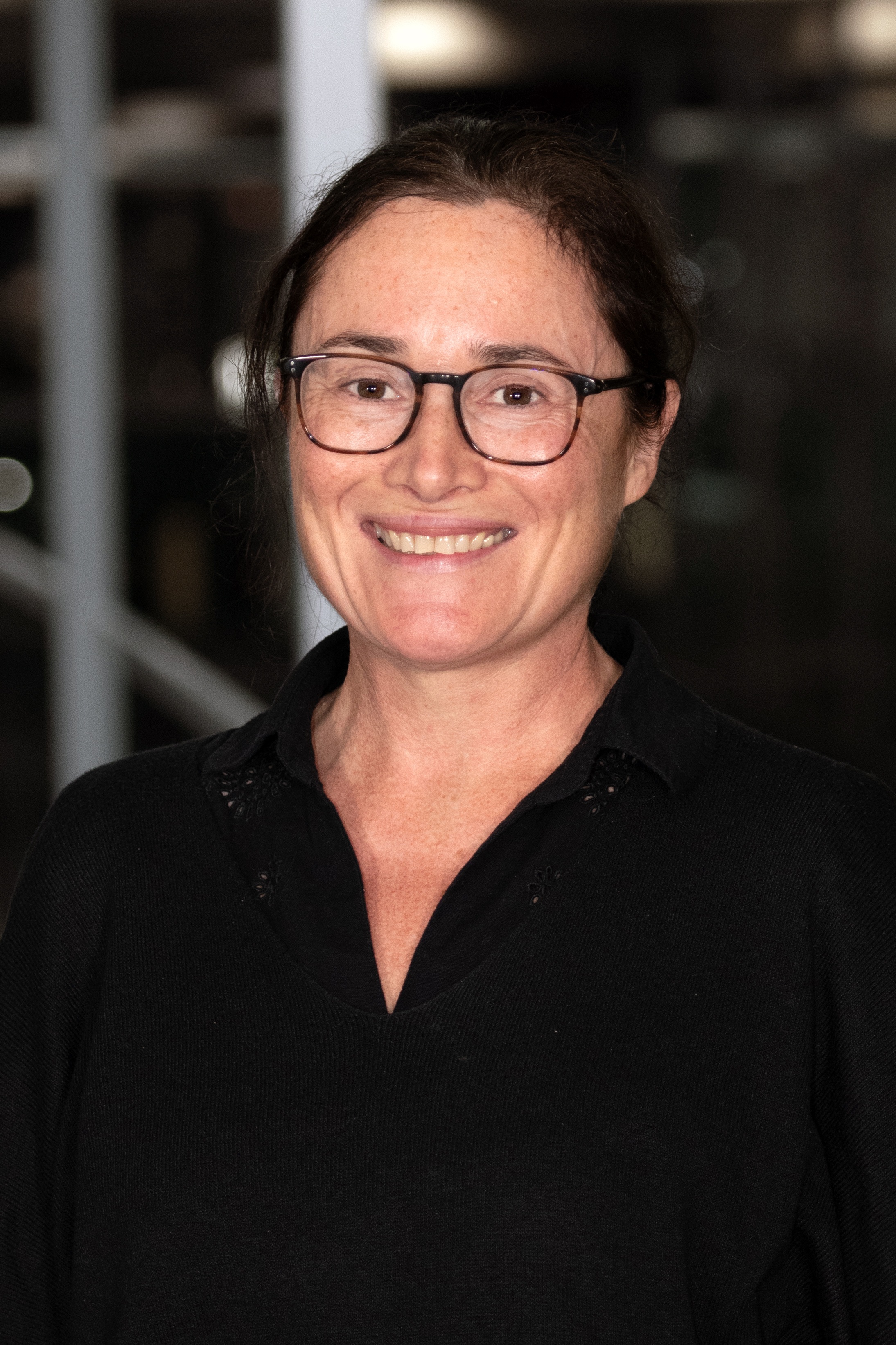
To learn more, I spoke with Leyronas for my latest episode of Frontiers of Commoning (Episode #71).
It was refreshing to hear how AFD has been attempting to create a modest “laboratory of the commons.” In the process, the small AFD team has come to understand that the commons requires a shift of mindset and development strategies.
As Leyronas put it in our interview, “Donor action is really guided by project logic. Goals are predefined and indicators [of success] are fixed. We usually have evaluations in advance or at the end. But commons evolve very differently. They follow long-term, open-ended processes with deliberation and adaptation.”
In a recent talk to the UN Food and Agriculture Organization (FAO), Leyronas explained how supporting the commons requires that development programs engage with the “relational logics” of a community. It has to focus on how people relate to each other, learn to cooperate, and care for natural systems. There must be time and space for commoners to experiment, to develop a collective solidarity and stewardship of shared wealth; to collectively learn; and to integrate practice & reflection, even at small scales.
It is an interesting sign that the FAO – a major global institution dedicated to improving agriculture and food security – is beginning to recognize commoning in its work. At an October 2025 conference in Rome, top officials publicly embraced the social and practical logics that commoning entails in a session entitled, “From Silos to Cooperation: Shifting science, technology and innovation paradigms for sustainability transitions.”
In our podcast interview, Leyronas stressed that taking the commons seriously requires a reassessment of the character of time, knowledge, and nature. “Today, we have a linear view of time in which progress lies ahead and there is only one direction to time.” Modern life presumes that instrumental, expert rationality is the best way to manage natural resources. But this is misleading, Leyronas suggested, because it fails to take account of social relations, processes, and context. In many instances, local, situated knowledge has much to contribute, but development agencies tend to impose their own scientific, decontextualized, expert knowledge on communities.
Development donors often presume that their scientific knowledge is “objective” and superior to the types of knowledge that local commoners bring to the table, said Leyronas. Expert rationality and objectivity are often used to justify the imposition of top-down “solutions” on communities, and the distancing of donor-experts from the affected communities. But Leyronas emphasized that “we [development agencies] are fully embedded in power relations. We are carrying our own value constraints.”
Adopting a commons-based approach to development is helpful, she suggested, because it requires “a more embedded, collaborative process” to help “mobilize local knowledge." Embracing a commons framework requires a shift of epistemology, too. Different (relational) categories of thought and language must be adopted.
Leyronas cautions that AFD’s commons work is a relatively small, exploratory project. And yet it has attracted keen interest in the development community. In 2017, the World Bank was starting to look at development through the lens of political economy. This led to a partnership with AFD in producing a 2023 book, The Commons: Drivers of Change and Opportunity in Africa, co-edited by Leyronas. When the World Bank mentioned the book in one of its regular “flagship reports,” it became surprisingly popular in development circles.
Still, the development world is not racing to champion the commons. Despite partnering with AFD in publishing The Commons book, the text itself “remains largely framed through a state-centered lens,” said Leyronas. It accents familiar market concerns such as efficiency, scalability and results, not community empowerment, shifts in ownership and property rights regimes, or Ostrom’s noted design principles for commons.
It remains to be seen if and how more Western development actors will embrace the commons in more serious ways. For now, it’s significant that AFD’s experimentation and book suggests how development assistance could be reconceptualized and expanded.
Personally, I believe interest in the commons as a development strategy will likely resume and accelerate at some point. The modern, capitalist narrative about "progress" through development is losing its credibility and luster. Powerful nations continue to have neocolonial relations with smaller nations. Global markets and supply chains are becoming more fragile and volatile as climate change and other ecological crises worsen. Not only are market/state institutions failing to address these issues adequately, they are not empowering ordinary people or sharing surplus market wealth with them.
For now, the investor class seems to prefer authoritarian drift over democracy, or at least acquiescence to the former. In coming years, it will be difficult to implement or champion forms of “development” that are not stable, humane, fair, and eco-sustainable. The commons paradigm offers many promising alternative pathways forward.
You can listen to my interview with Stéphanie Leyronas here.






Recent comments