
Our modern mental maps of commons are woefully inadequate, in part because we have forgotten the history of commons and its once-flourishing folk culture.
Leah Gordon, an English photographer, writer, and filmmaker has set out to fix that through a deep dive into the history of English commons. The result, produced with two collaborators, is her fascinating and beautiful book, Common People: A Folk History of Land Rights, Enclosure and Resistance. Her two partners in the project are Stephen Ellcock, a renowned visual curator, and writer Anabelle Edwards, who has studied alternative lifestyles that reject the modern market/state and its culture.

Common People is a stunning visual portrayal of English commoners over the centuries. It looks at their everyday struggles, feelings, creativity, and cultures, bringing the human vitality of that world alive in ways that print usually does not.
The book draws upon dozens of captivating paintings, etchings, and folk relics from English history as well as many contemporary photographs of commoners who carry on premodern traditions. The photos, taken by Gordon and Edwards, provide revealing glimpses into the eccentric, glorious, and sometimes unsettling realities of commoning as a culture.
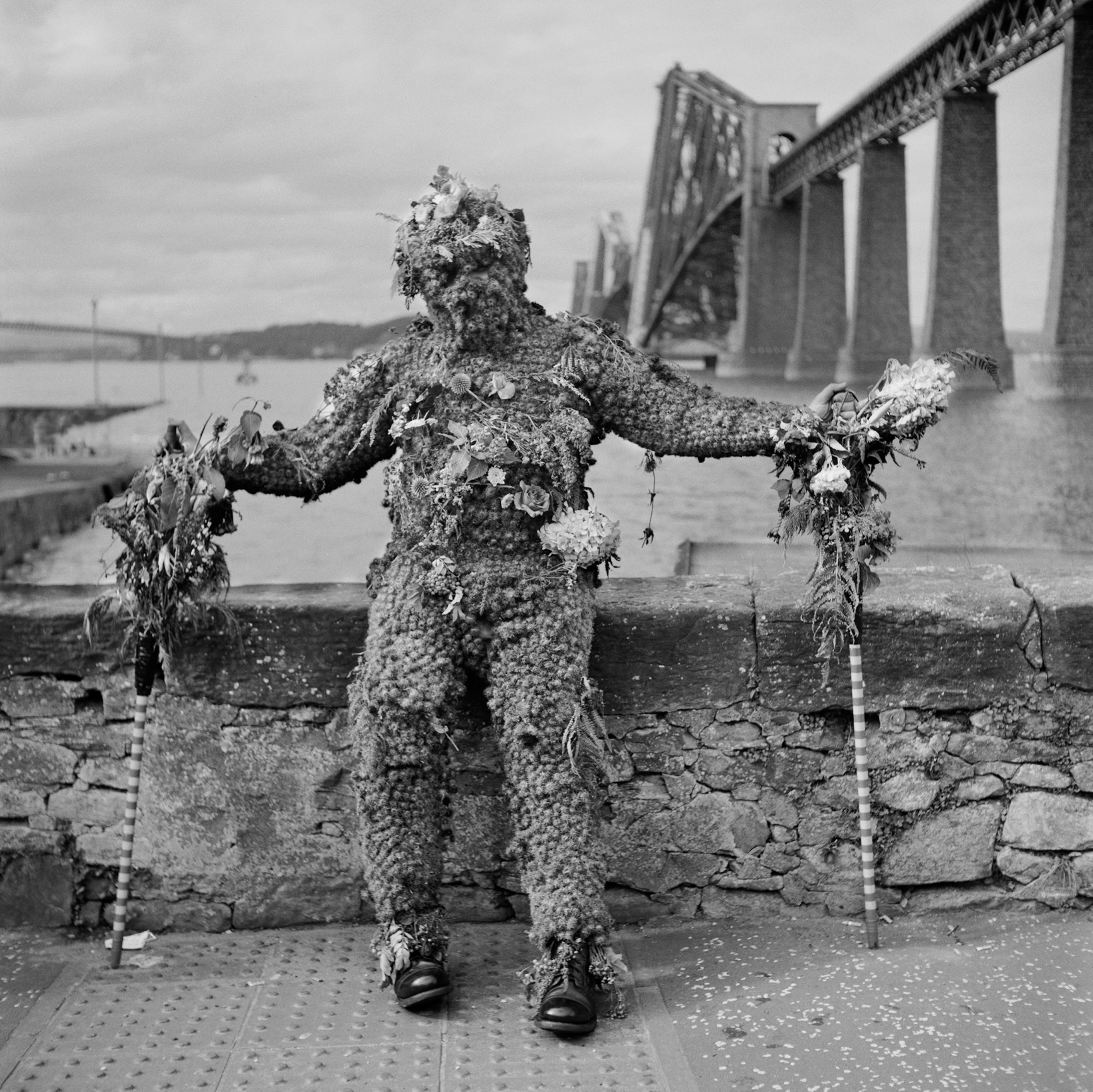
There is the tradition of The Burryman, for example. For 1,000 years, on the second Friday in August, the English town of South Queensferry has selected a man to dress up in a costume covered with about 11,000 itchy plant burrs, with openings only for his eyes, nose, and mouth. The role can only be played by a man born there and “requires deep commitment,” said Gordon. The Burryman then walks a ceremonial nine-mile route while carrying flower-covered rakes, along with two attendants, and is frequently plied with shots of whiskey along the route. The origins of the tradition may have been to bring good luck to local fishermen or to commemorate the hiding of Scottish king Malcom III from the English, through this disguise.
To learn such curiously fantastic commons traditions, I spoke with Leah Gordon in my l latest episode of Frontiers of Commoning (Episode #76).
It quickly becomes clear that Common People is not just a history of commons. It is also about how memory of the commons persists through a shared culture, shaping contemporary life and politics. The book contains a photo of the Travelly Well, which has been used to water livestock for thousands of years; it is near an ancient route used by travelers. In Longmead, England, commoners host a spectacular event twice a year in which herding dogs escort large flocks of sheep back from common fields in the highlands.
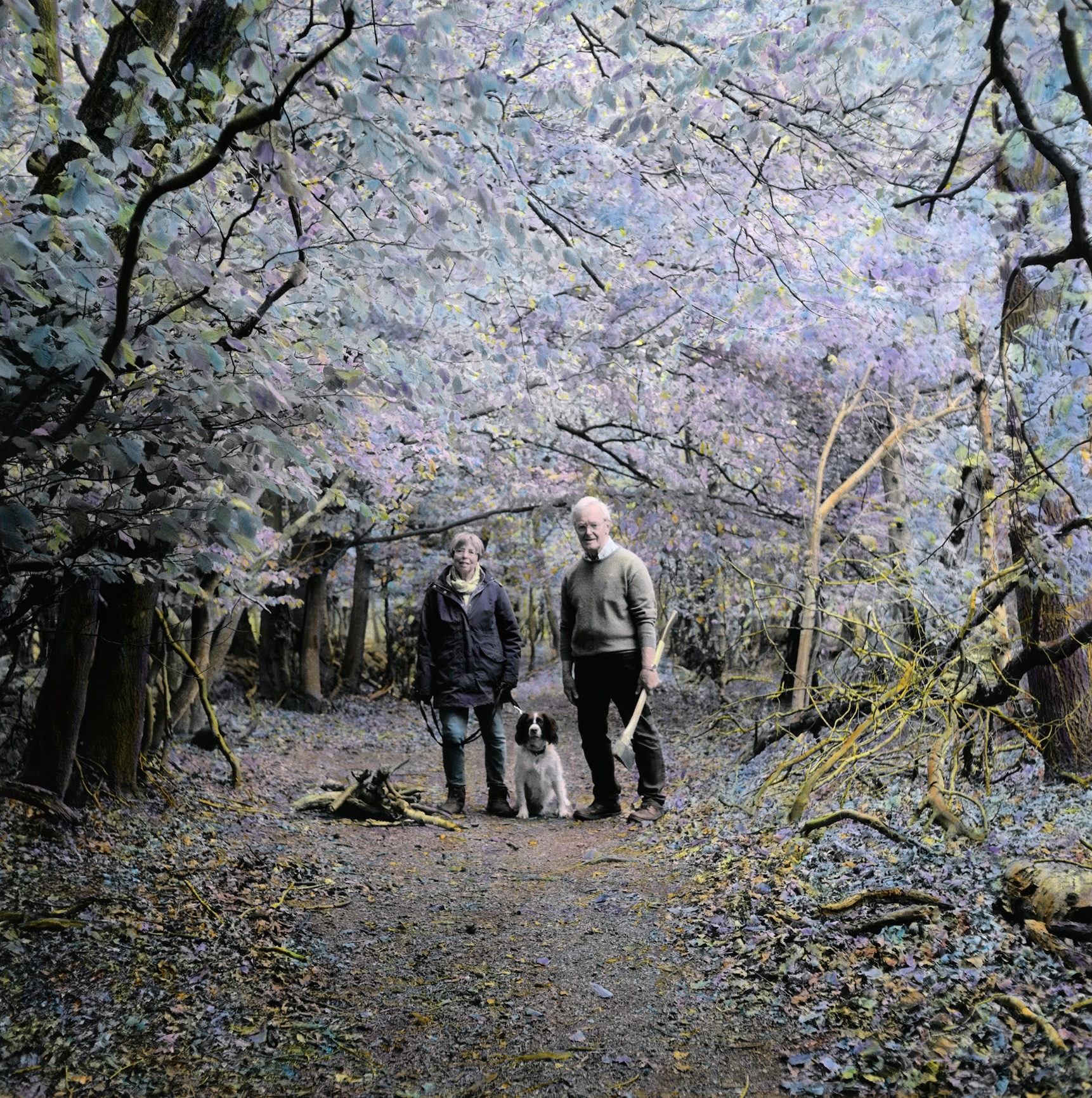
There are many English people who legally hold rights to commons via their land ownership, sometimes in improbable modern settings. Through their land deed, David and Sandra Webb have rights to use Silvington Common for the right of pannage (pigs grazing acorns in the forest), the right of estover (collecting wood for fuel and fencing), and piscary rights (taking fish, which are gone).
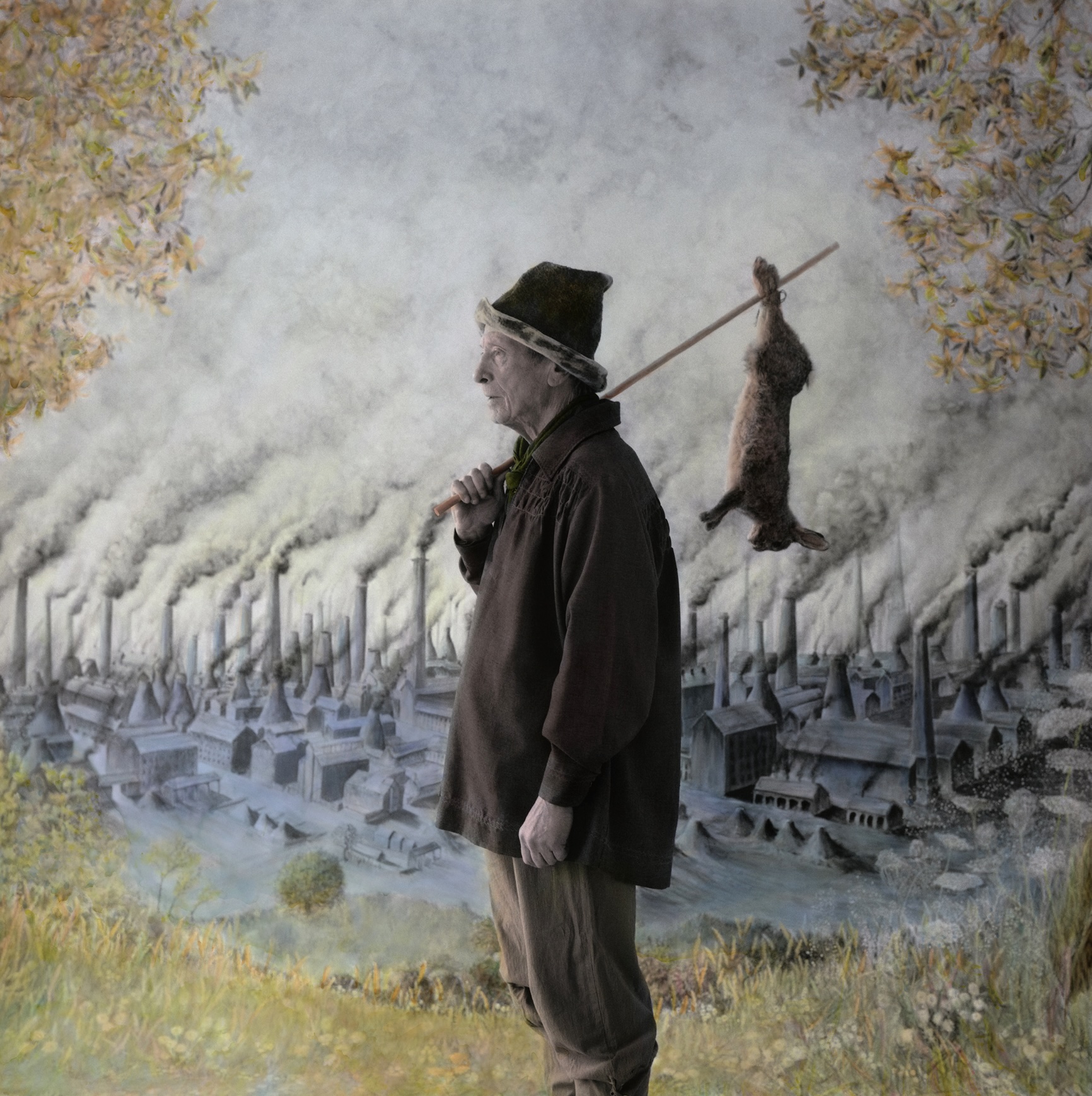
Modern-day commoners often manifest in different social identities than they did centuries ago while nonetheless continuing cherished traditions and values. For example, today’s commoners may be activists who campaign against new highways and nuclear power in order to defend the land. They resist limits on their “right to roam” and camp on privately owned land, echoing memorable acts of civil disobedience such as the Kinder Scout mass trespass of 1932 in which thousands of commoners surged over private land to protest enclosures.
Yesterday’s commoners were often forcibly marginalized by emerging capitalist society. Today’s commoners may have been similarly pushed to the margins of mainstream life as Ramblers, Gypsies, nomadic travelers, festival-goers, ravers, and nature lovers. Gordon has photos of them all, many posed in old-style clothing and postures, their images printed with old-timey color-tints to echo the archaic colorizing technique of 18th Century photographs.
A series of essays accompany the book’s many images, providing detailed treatment of such themes as “Enclosed Land and Vanquished Peasants,” “Rural Rebels and Traditions,” and “Vagabonds.” The essays are useful complements to the evocative photographs and art works, providing background histories of the premodern experience of being a commoner.
Gordon explained that some of her interest in the commons comes from growing up between Liverpool, once a center for the slave trade, and Manchester, where the Industrial Revolution got started. She came to realize that enclosures of commons were an essential third force propelling early capitalism.
At a certain point, Manchester industrialists came to see that “the plantation system based on slavery wasn’t creating enough capital any more,” said Gordon, citing the book Hegel, Haiti, and Universal History, by German scholar Susan Buck-Morss. “[Industrialists] wanted more capital for investment in industrialization,” said Gordon. Buck-Morss “asked quite a pertinent but at first shocking question, which is, 'Why didn't [industrialists] bring enslaved Africans to work in the factories in Manchester if they needed a workforce?'”
The answer is that it was uneconomic – a view that economist Adam Smith shared at the time. Smith didn’t object to the brutality of slavery, but rather to its illogical economics.
“The whip is uneconomic,” was Smith’s thinking, said Gordon. “A better way of enforcing people to work is to give them a choice between starvation and work [in brutal industrial factories].” They will choose work.
In this scheme, enclosures amount to a kind of domestic colonization to create a workforce that avoids the costs and complications of colonialism and slavery. The thinking went, “Why don't we instead create a system that throws people off the land and takes away their rights the commons, so that they don’t have a choice besides starvation or work in those factories?” In this sense, enclosure was a crucial process for establishing capitalism.
To document how this process proceeded over centuries, Gordon includes something I’ve never encountered in the vast scholarship of the commons -- a detailed timeline of important moments of land enclosure in England from 1066 to the present. The list of notable events spans eight pages of small type and features more than 100 entries.
More than enclosures, however, he book documents the resistance of commoners as a cultural form. “People take to the streets with culture, not just with demonstrations,” said Gordon. “If you physically perform your history, I think it takes on a much stronger dynamic. Different activities are a part of not just regaining the commons, but regaining one’s imagination of the commons -- because a commons needs to be in your mind as well as your heart and actions.”
There are many other fascinating stories in my interview with Leah Gordon about the history of English commons and its manifestations in folk culture. You can listen to our conversation here.



Recent comments