
Surging real estate markets, among other factors, have made US housing unaffordable to large segments of the population, especially young people. So much of it is designed for conventional nuclear families and upscale buyers seeking luxury amenities. For lower- and middle-income people, simply finding affordable housing is hard enough; it almost seems utopian to want housing with attractive public amenities, shared spaces, and a spirit of neighborliness and belonging.
Fortunately, a number of renegade architects, builders, and city planners see great potential in shared living arrangements. There are many varieties, from housing cooperatives and intentional communities to co-housing and communes. The common goal is to use innovative architectural and social design to make residential living more enjoyable and affordable.
In my latest podcast episode (Frontiers of Commoning, Ep. #78), I spoke with two notable architects – Neeraj Bhatia and Antje Steinmüller – who have intensively studied the social and economic dynamics of co-living. This is a relatively neglected field of inquiry in architecture, housing development, and urban policy. But as my two interviewees explained, commoning can play a powerful role in expanding this overlooked sector of housing.
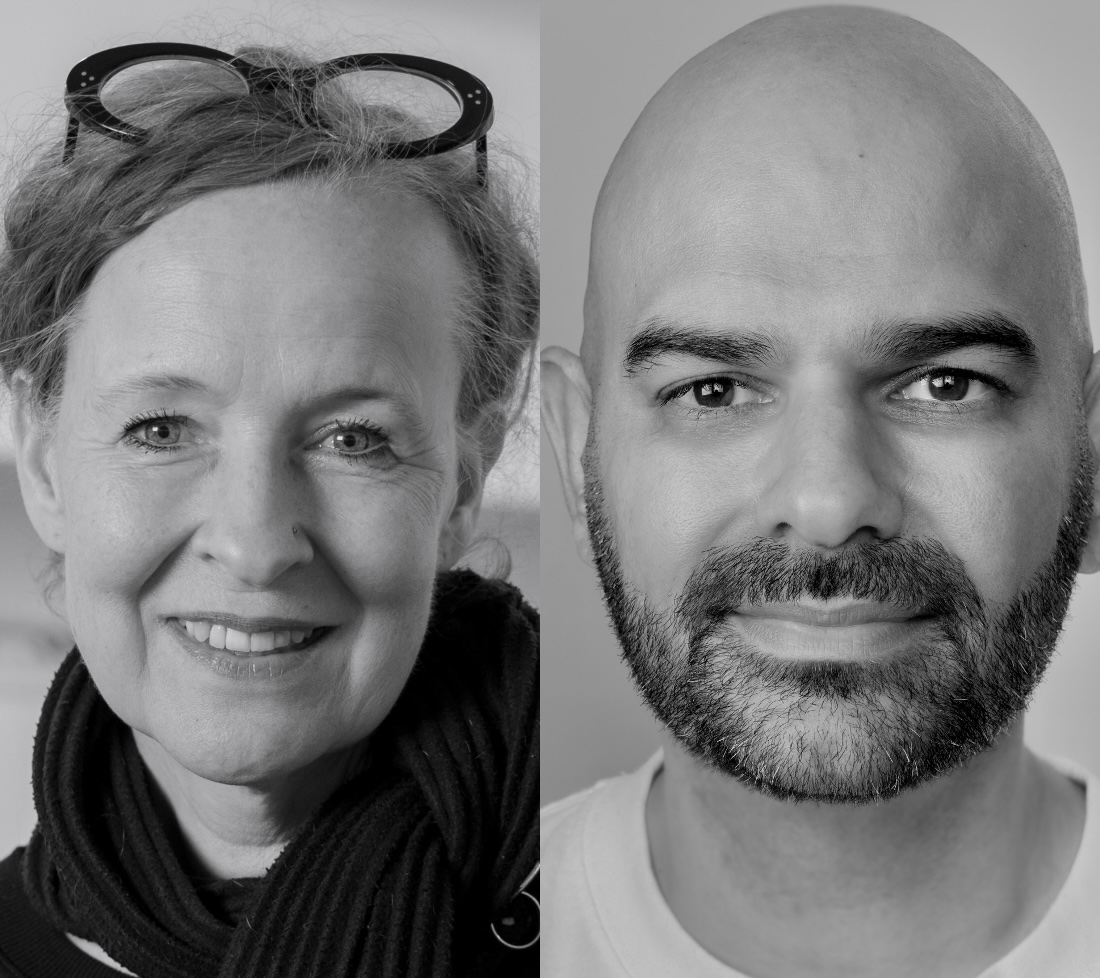
Neeraj Bhatia spent years as a San Francisco architect and urban designer at the California College of the Arts. His research – much of it conducted via The Open Workshop research-design project – has focused on commoning, infrastructure, housing, and urbanism. He recently joined the Columbia University Graduate School of Architecture, Planning and Preservation, and won the prestigious Rome Prize in Architecture for 2026-2027.
Bhatia first discovered the potential of collective living when he visited “The Embassy,” an urban commune in an old Edwardian house in San Francisco. When attending a public lecture there, some residents took him on a tour.
“It was so incredible to see the type of work they were doing,” he recalled, “—the radicality of the ways that they were living, the experimentation in labor practices, the emotional support they were able to provide each other, this really high quality of life they were able to achieve in a very expensive city like San Francisco.” As a point of reference, he pointed out that San Francisco has a 200,000-unit shortfall of affordable housing relative to need.
Along the way, Bhatia began to collaborate with architect Antje Steinmüller, now a professor and chair of architecture at the University of Michigan’s Taubman College of Architecture and Urban Planning. She is also a co-founder of ideal X, a collaborative practice focused on public/urban spaces, public art, and architecture, and a former principal of Studio Urbis.
Steinmüller and Bhatia began to conduct in-person interviews to explore the social dynamics of co-living, discover what residents really want, and understand what types of people choose such to live in such settings.
They also embarked on a more systemic study of co-living options around the world to study the range of existing options. “We looked at models in Asia and the share houses in Japan and Korea,” said Steinmüller. “We looked at Baugruppen in Germany and Austria, and cooperatives in Switzerland, to augment the breadth of purpose-designed structures. We weren't able to find as many in the U.S.” [Baugruppen is something of a cross between a communal home and a condo association, in which prospective residents of a building come together to plan and build housing, and then develop it themselves, without a general contractor, to reduce costs.]
Bhatia and Steinmüller realized that a lot of contemporary research on collective housing focuses mostly on “the aesthetics of the architectural product. It sometimes doesn’t get into how day-to-day life works in these places. I think that’s something we wanted to do in our research….At the scale of twenty people deciding on day-to-day life,” said Bhatia, “it felt so intimate and material that I could study how politics and governance interact with architectural form.”
They began to do “post-occupancy appraisals” of architectural design in collective housing to learn what actually works and what doesn’t. Which groups seem to be thriving and why? What designs amount to window-dressing, and what designs functionally improve a community?
They explored how group living arrangements could be made more sociable and enjoyable, and what types of design and governance to avoid. For example, some commercial developers think it’s enough to hire a “community manager” to orchestrate a social scene and group harmony. But Bhatia realized that the very idea of a community manager is an oxymoron. “You don’t manage a community; the community has to create itself,” he said.
One jointly authored study, “Commoning Domestic Space,” identified three key elements that make collective dwellings successful: Hardware, which refers to the architectural structures that affect relationships among residents; Software, the social patterns that residents adopt to claim domestic space; and Orgware, the organizational frameworks and governance systems that make collective life possible.
Among their many monographs and essays, Steinmüller and Bhatia in 2022 published a white paper presented to the planning commission in San Francisco, “Learning from Collective Living: An Overview of How to Live Together,” which distills their findings from collective living case studies and served as the basis for changing group housing legislation.
Certain amounts of shared space – properly situated in a building – can make for a more sociable community. Building techniques can improve the construction economics. City planning offices can craft policies to support co-living as a viable option. Well-designed governance for co-living is important, of course, though in the end, community members must put in the time and hard work to “invent themselves” as a community.
Bhati has long lamented the tidal wave of expensive, market-rate housing and the corresponding scarcity of affordable housing in cities. So he and Steinmüller began to ask how the co-living model as a social/architectural form might compete with commercially driven real estate.
The found some promising ideas in the Haight St. Commons, a group of about 50 co-living communities in San Francisco comprised of between 400 to 600 people who reside within a ten or fifteen minute walk of each other. The Haight St. Commons describes itself as “a network of not-for-profit co-ops and intentional communities in the heart of San Francisco. We believe that human beings are not meant to live alone. We believe that community provides purpose and joy to modern life. We are here to help make this reality for everyone who believes the same.”
Besides providing affordable housing, the members of the Haight St. Commons provide mutual care and organized support for each other and collective housing as a residential genre. Its members are known to help each other with neighborly care such as errands, informal medical and healthcare such as care during the pandemic, and speaker systems for block parties.
What’s so interesting about this federation of commons, said Bhatia, is how it “allows for a scaling [of impact] that doesn't erode the local, day-to-day agency of a given community. We're very intrigued by this model as a way to ‘scale up’ and, say, approach the market.”
However, co-living has not become a more mainstream thing, Bhatia noted, because it’s generally invisible. “Next time you come to San Francisco,” he told me, “we'll walk around the Haight district where these communities are, and you'll say, ‘Hey, I don't see these communes!’ And it's completely true. If you're walking around this neighborhood, you would have no idea that there's hundreds of people co-living behind the facades of Victorian houses and warehouses and so forth. They're quite hidden.”
With their research, design, interventions, and policy ideas, Bhatia and Steinmüller are already starting to change that.
You can listen to my full interview with Neeraj Bhatia and Antje Steinmüller here.








Recent comments