As the Commonsverse becomes more robust worldwide, a more urgent question is arising: Can commoners work constructively with the state, and if so, how?
State power tends to have its own narrow ideas about how to get things done – and what governance, law, bureaucratic power, and public participation should look like. Commons open up new possibilities for getting things done, however. They can generate types of value that elude markets and bureaucracy, and offer new ways of knowing and being.
But there’s a catch. It can be tricky and difficult for the state and commons to work together. Each has such different premises about power and worldview. Can they develop some sort of rapprochement?
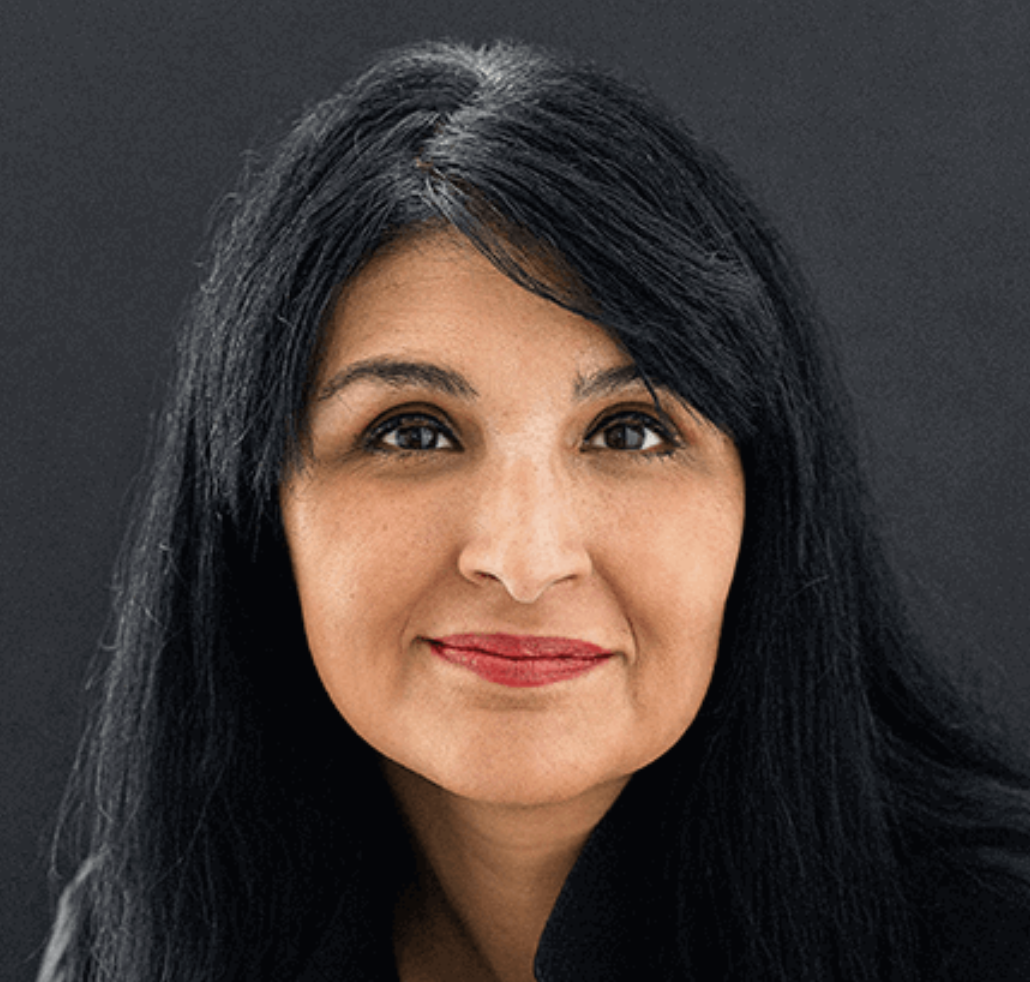
One of the more astute commentators on this topic is Torange Khonsari, a professor of architecture and design activism for more than 20 years at London Metropolitan University and other universities. An academic until recently, Khonsari is unusual in focusing on community-driven development projects, especially involving art, performance, and architecture.
Through the nonprofit group she cofounded 22 years ago, the Public Works Group, Khonsari instigates bottom-up commoning initiatives while navigating around barriers erected by the state, but sometimes actually facilitated by it.
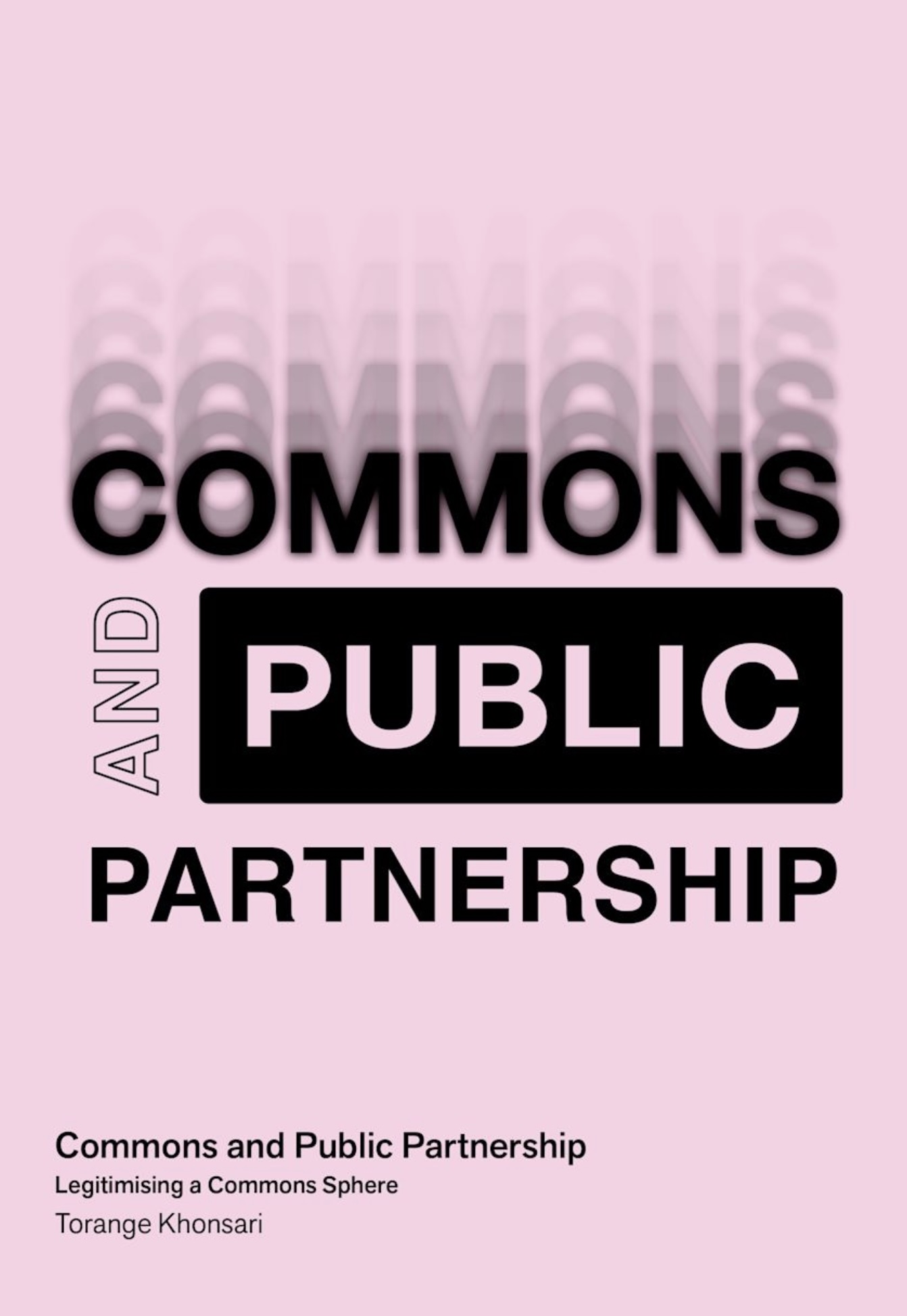
A few months ago, Khonsari published a new book, Commons and Public Partnership: Legitimising a Commons Sphere, which distills much of her wisdom on this topic. I spoke with her recently on my Frontiers of Commoning podcast (Episode #79) to learn more about her ideas about commons/public partnerships.
For Khonsari, it’s important to talk about commons and not community because the meaning of terms like community and civil society can be quite vague and slippery. By contrast, the term commons has a more specific, articulate meaning to her. It’s about “a culture of collaboration, co-governance, relational power, relational ethics, and care-based resource production and management.” A commons is more focused, coherent and muscular than “community” because a commons has standing power, an organized cohort of people, and shared purpose.
A key appeal of the commons, by Khonsari’s reckoning, is that it’s “an arena for collective risk-taking with care.” It moves into zones that the state and market often avoid, perhaps because politicians, bureaucracies, and established businesses are risk-averse and more focused on generating revenue or political acclaim.
Khonsari had an epiphany about all this when reading Kate Raworth’s Doughnut Economics. In the course of introducing “the doughnut” concept (an ecological ceiling for market activity and a social floor of basic needs that must be met), Raworth lists what she regards as key domains of a 21st Century economy. First, the Household, the Market, the Commons and the State. Above them, Raworth lists The Earth, Society, and Economy, and below them, Finance, Business, Trade, and Power.
When Khonsari plotted these realms as a graphic, she saw that the commons, state, and market are right in the center, and then exclaimed, “Oh my god, maybe we need a partnership between the state and commons as a kind of institutional fulcrum” to revamp the relations among the economy, ecosystems, and society. As it happened, certain circles of scholarship and activism at the time were just beginning to experiment with the novel idea of “public / commons partnerships,” especially in Europe and the UK.
But the term “public/private partnership” doesn’t feel right to Khonsari because, by putting the word “public” first, it prioritizes the state over the actual potential of commons. It’s as if the state should take priority over commoning, which she believes must become a “third political sphere.”
“For me, it was very, very important that it should be the other way around, commons/public partnership, with commons named first,” Khonsari told me. She noted that the more familiar term, private-public partnership – the cozy alliance of the state and business – suggest that the “private sector” is asserting dominance over and co-opting the public sector.
Khonsari believes that the commons must be seen as a legitimate political and production sphere in its own right. When engaging with the state, commoners must have an equal standing with the state, she explained, and not a subordinate role. The state should not co-opt the power of citizens and communities, as it often does.
The state and bureaucracies are accustomed to asserting power over others because they have command of great civil and coercive authority, civil infrastructure, taxation authority, large treasuries, etc. But this poses challenges to a state in working with commoners because politicians and bureaucrats must learn to enter into collaborative, respectful relationships of mutual care. They must learn new ways for “how we talk to each other, how we negotiate what resources we need and produce, how we deal with intellectual property, and so on.”
The point of commons/public partnerships, then, is to “reestablish the power of citizen/state relationships based on distributed power,” Khonsari explained. “How do we start to practice relationality [with the state]? That's at the heart the book.”
In the United Kingdom, citizens are fortunate to have many legal and civic traditions that can be adapted to advance commoning and community development. For example, under a state delegation of authority to civic councils, an underused entity, community groups can secure as much as 10 percent of local government revenues to administer themselves. The Paddington Community Development Trust is one example, said Khonsari.
Under the Localism Act governing land and neighborhood planning, community groups can co-produce things and develop community policies. Groups can also use “community charters” as a social contract between state and commons, which can range from the super-informal and creative to formal memoranda of agreement. Some community groups that Khonsari has worked with have used these means to host parades or public events. Others have mounted arts exhibitions or brought people together in “temporary commons” – “people’s assemblies” of sorts.
These sorts of initiatives reverse the conventional norm that the state “gives” and citizens “take.” The power is to instigate bottom-up action and commoning is a significant shift. It validates the idea that people can enact their creative agency and desires, and enter into co-equal partnerships with the state.
Of course, the state generally prefers to maintain its dominance over citizens, or indeed, to avoid empowering them. State social services tend to focus on disabled or deprived individuals, for example, treating them as objects of service and avoiding empowerment of middle-class and educated citizens. From the state’s perspective, it makes sense to keep people quiescent and non-threatening.
Despite this tendency, Khonsari believes that commoners can pioneer new types of relationships with the state by exploiting “cracks” in the system as new places to grow. She invokes philosopher John Holloway’s idea that cracks in the system – places the state has ignored or failed to function well – can serve as spaces for action -- new forms of practice, new types of commoning. (This is more or less what “pirate care” has achieved. See Episode #58 of Frontiers of Commoning.)
As new commons take root and become visible, the very definition of the “common good” or “public good” begins to shift.
Khonsari was always disturbed that “the common good” has been understood as a glittering abstraction. This makes it easy to co-opt the idea. Politicians and business executives claim that state programs or the mythical Invisible Hand of the free market benefit everyone, for example, even though benefits actually flow to the privileged few or politically connected. Khonsari calls this a communal commons – an abstract version of the common good disconnected from people’s personal lives.
By contrast, a distributive commons, as she calls it, is stewarded by commoners themselves. It produces things in particular ways to serve particular, identifiable people. It’s not a generic “common good,” but one that takes place in a distinct context for specific purposes. The commons good here is produced interpersonally through relationships,” said Khonsari, “and the process includes the self.” That means we have personal roles and identities in making this type of common good happen, via our commoning. In a distributive commons, the common good arises from real, autonomous commoners enacting care in their own voices, fulfilling their own priorities. The process engages our individual sense of self, something that doesn’t happen in communal commons.
You can listen to my full interview with Torange Khonsari here.




Recent comments